Justyna Lorenc, Doctor of Audiology

You know that moment at a dinner party when people keep arriving,  the music gets louder, and your eyes and ears start to work harder to pick up cues when the sentences meld together? Did she say, “her nose is in the air”, or “she has nice hair?!” Sometimes misunderstandings can be hilarious, other times awkward, but often we opt to pretend to hear what was said and give a smile, hoping that was an appropriate response! I am a Doctor of Audiology in my late 40s, and my hearing test shows “normal hearing”. Why am I also struggling with this problem that all my patients complain about!?  I will tell you why…

Your brain is built to filter out unwanted sounds. The ability to hear a specific conversation in a sea of noise is referred to as the “cocktail party effect”: the phenomenon of being able to hear your name out of a loud crowd and localize where it’s coming from. However, as we age, or if we have a hearing loss (or both), this becomes harder to do. Adults can experience a slowing down in auditory processing speed, which makes it more difficult for the brain to quickly sort through all the competing speech information.  Even if you hear the words, it might be delayed or you may forget part of what you heard.

We will first notice that we are struggling to hear in crowded places. This is because background noise shows a weakness in your hearing, especially if there is a high frequency hearing loss (the most common type of hearing loss from aging and noise). The high frequencies are where many consonants fall, including “s”, “f”, “th” and “sh”. The most common complaint is that “everyone is mumbling”. While some people ARE soft spoken, the shocking realization is that most people are NOT mumbling, but speaking the same way they were years ago, when you were hearing them! The “mumbling” sensation is that your ears aren’t picking up sound clearly anymore.  Noise in crowded rooms can also mask, or cover-up, the sounds we want to hear.

So what can I do?! 

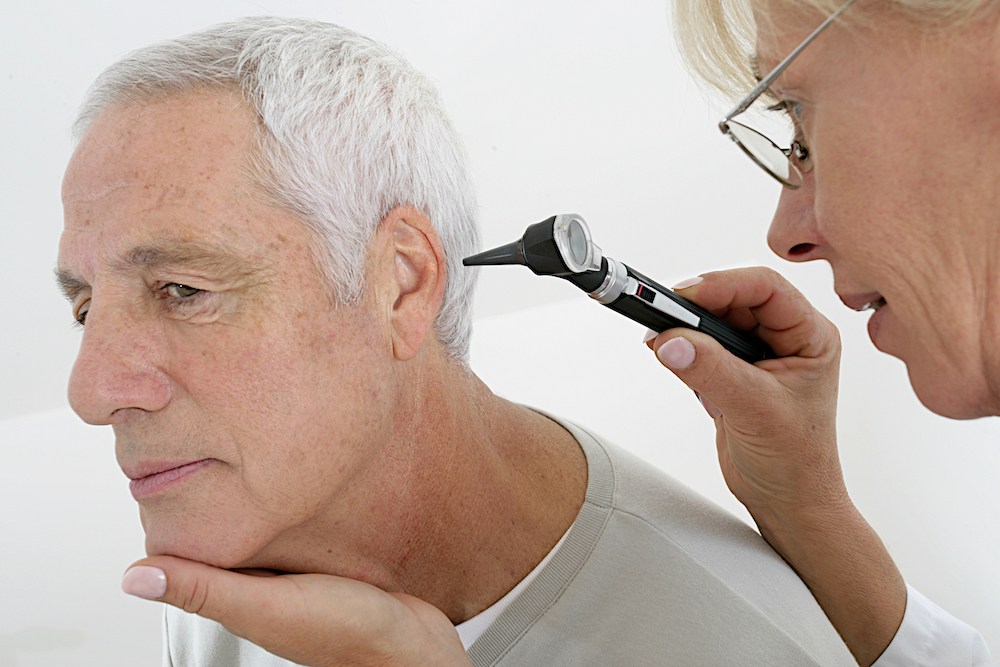
The first step is to get your hearing tested. At one of our clinics at Sound Hearing Care, we provide a full hearing evaluation and will take the time to go over all the results with you. We will provide you with a report and forward it to your doctor. A full hearing evaluation is performed by a licensed and experienced audiologist, not a technician. See if your hearing is truly normal on a regular audiogram (250-8000 Hz) and if it is, we will look at your extended high frequencies, to see how you are hearing up to 16,000 Hz. Not all clinics are equipped for this test. This helps us find hidden hearing loss and helps provide information about tinnitus that might not be captured on a regular hearing test. We will look to see how you hear in noise; an important step to determine the best personalized strategies for you to use in your everyday life.  If you are more interested in a quick check, visit us at Devonshire Mall (next to Indigo) for a hearing screening (no appointment necessary, and at no charge).

Strategies for Hearing in Noise

Choose a good seat

  • Sit with your back to a wall to minimize background noise from behind.
  • Position yourself where you can see the faces of the speakers.
  • Choose a well-lit area where light is behind you, not behind the speaker.
  • Pick booth seating or a corner spot for best acoustics.

Communicate your needs

  • Remind the people in your life to take 5 seconds and address you before they begin to talk to you. If you hear your name, or feel someone tap you on the shoulder, you are set up for success to focus on what they are about to say.
  • If you missed something, it is fine to ask someone to repeat or rephrase what they said.

Give yourself a break

  • If you feel your energy draining, step back for a few minutes. A short break gives your brain and ears a moment to reset.
  • Be aware of how you are feeling. If you are tired, distracted or worried, this can affect your ability to understand the other speaker.

Use hearing aids with directional features

  • See if your hearing aids have directional microphones and that noise-reduction features are active.
  • See if your hearing aids have a “noise” or “party” program for you to use.
  • See if your hearing aid phone APP gives you more control for reducing background noise.

While these strategies are useful, my takeaway message from this article is : start with a hearing test. A good rule of thumb is to check your hearing every 1-2 years, or sooner if you notice a change in hearing.

Take away message: Get your hearing tested! 

Call us today to schedule yours: 519.962.3300